If you’re starting a business with another person, a general partnership—also known as an I/S—is a classic solution. This structure is quick to set up, requires no capital, and is suitable for two or more people who want to run a business together. However, the rules differ from those of a limited liability company, and liability in particular stands out. At Accountview, we help you set up an I/S and manage its day-to-day operations, ensuring you get off to a solid and secure start in your partnership.
What is a partnership?
An I/S is a business with two or more owners, who are called partners. The owners can be either individuals or legal entities, which means that a limited liability company can also be a co-owner of an I/S. This structure is well-suited for startups involving two or more people who want to keep costs and administrative burdens low.
Registration is done through virk.dk; all you need to do is choose a name, an industry code, and a start date. If your expected revenue exceeds 50,000 kroner over the next 12 months, you must also register for VAT. Registration is free, and your CVR number is usually issued within one to two business days.
Binding: An Important Detail
The partners in a general partnership (I/S) are personally, unlimitedly, and jointly and severally liable. This means that each partner is liable for the entire debt of the business, not just their share. If one partner is unable to pay, the creditor can seek payment from the other. This is a risk you need to be very aware of, especially if the partnership involves significant investments, loans, or long-term supplier agreements.
That is why we always recommend that you draw up a written partnership agreement before the business starts. Among other things, the agreement can address the distribution of profits, work assignments, termination, and the sale of shares. This is also where you can establish rules for how you will handle the situation if one of you wishes to leave the business.
Taxes and Accounting in a General Partnership (I/S)
An I/S is tax-transparent. Profits and losses are taxed as personal income for each individual partner, not for the partnership itself. You must therefore report your share of the profit or loss on the tax return form filed with the Danish Tax Agency each year and pay B-tax on an ongoing basis based on the preliminary tax assessment.
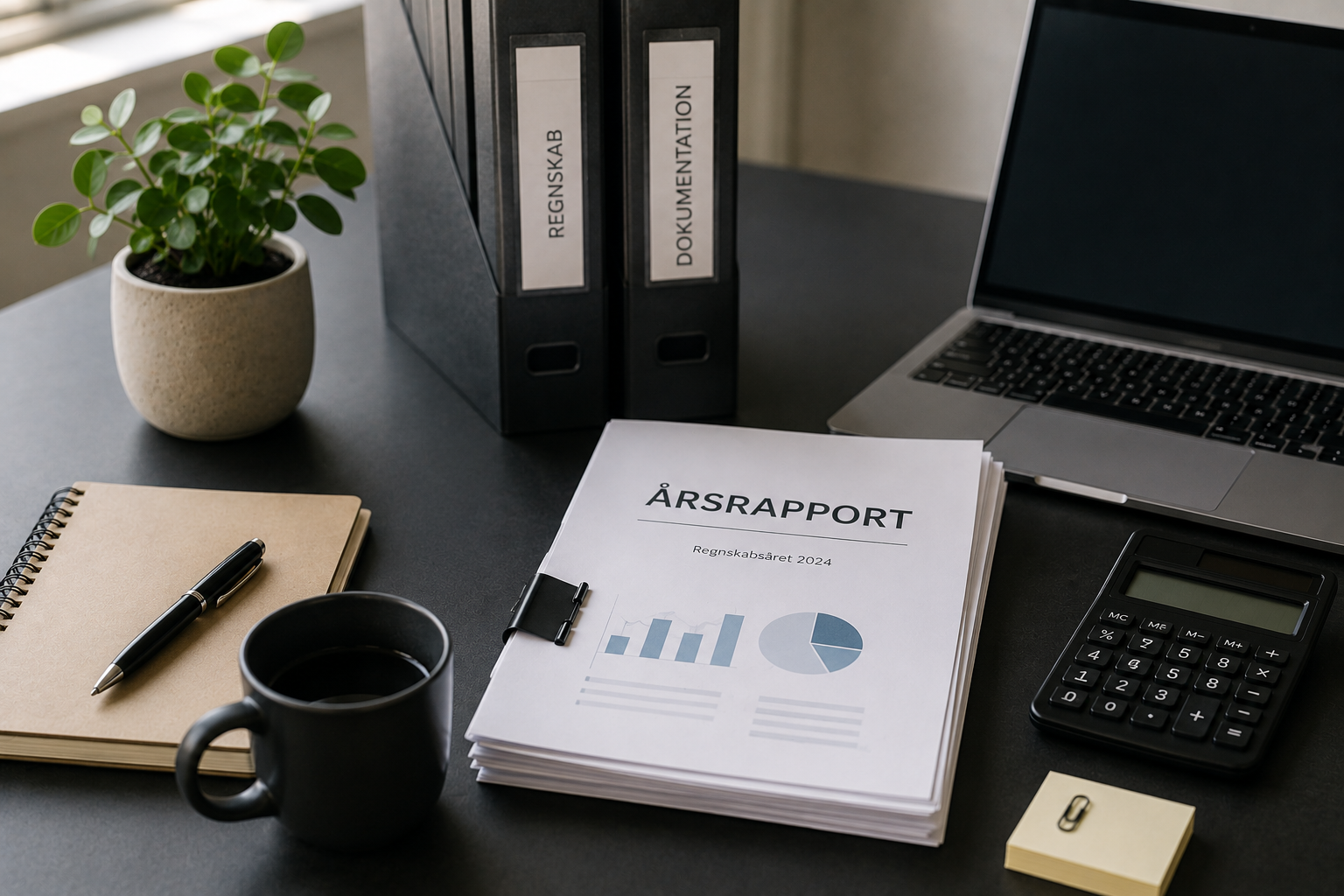
If at least one of the owners is an individual, the I/S is not required to submit an annual report to the Danish Business Authority. However, you must still submit tax returns to the Danish Tax Agency and comply with the Bookkeeping Act. If the group of owners consists solely of corporations, the rules for submitting an annual report are the same as for other corporations. We’ll keep an eye on your situation to ensure you don’t overlook any reporting requirements.
Here's how Accountview can help you get started
We have experience helping partnerships get started, whether in the consulting industry, the trades, the creative professions, or online retail. We offer registration of the I/S, assistance with drafting a partnership agreement through your attorney, setup of Billy, Dinero, or e-conomic, monthly bookkeeping and preliminary tax statements for each partner, as well as advice on transitioning to an ApS as your business grows. You’ll have one dedicated advisor, a clear price, and quick response times.
Frequently Asked Questions
Can we withdraw profits from a general partnership on a monthly basis, or do we have to wait until the end of the year?
You can withdraw profits on an ongoing basis, but the withdrawal itself has no tax implications. Tax is calculated based on the total profit or loss at the end of the year and is allocated according to your shares as specified in the partnership agreement. We recommend that you set aside a fixed amount each month and leave a buffer to avoid any tax liability.
What happens if a stakeholder wants to leave the company?
The rules are set forth in the partnership agreement. If you do not have a contract, the general rule is that notice of termination must be given six months in advance, and the business must be dissolved or purchased by the remaining owners. With a clear agreement, you can establish a framework for withdrawal, valuation, and acquisition in advance to avoid conflict.
Can a general partnership (I/S) be converted into a limited liability company (ApS) at a later date?
Yes, many partnerships evolve from a general partnership into a limited liability company (ApS). The conversion can be either taxable or tax-free, depending on the rules governing business conversions. We’ll run the numbers so you know what it will cost and which model offers the greatest tax benefit for you.
Would you like some help getting your I/S off to a good start? Let’s have a quick, no-obligation chat about your plans.