If you’re taking the plunge as an entrepreneur, bookkeeping is often what seems most overwhelming. Where do I file my receipts, what are the tax authorities’ requirements, and when do I need to register for VAT? At Accountview, we help new self-employed individuals with their bookkeeping so you can get your finances in order from day one and focus on building your business.
Why is bookkeeping important from the very beginning?
The short version: because it’s required by law. The long version: because good bookkeeping gives you a real insight into whether you’re making money, where the money is going, and what you can afford to invest in. The Bookkeeping Act requires that you regularly record income, expenses, and supporting documents, and that you retain these records for five years.
Many entrepreneurs start out doing their bookkeeping in a spreadsheet and quickly realize that it becomes confusing as soon as sales tax comes into the picture. Accounting software provides structure, reduces errors, and helps you sleep better at night.
How to Get Started
We always recommend a simple step-by-step process when a new business is getting started with bookkeeping:
- Choose accounting software that suits the size of your business. Billy and Dinero are often good places to start, while e-conomic offers more options if you’re growing quickly.
- Set up a chart of accounts tailored to your industry so it’s easy to see that costs and revenue are properly categorized.
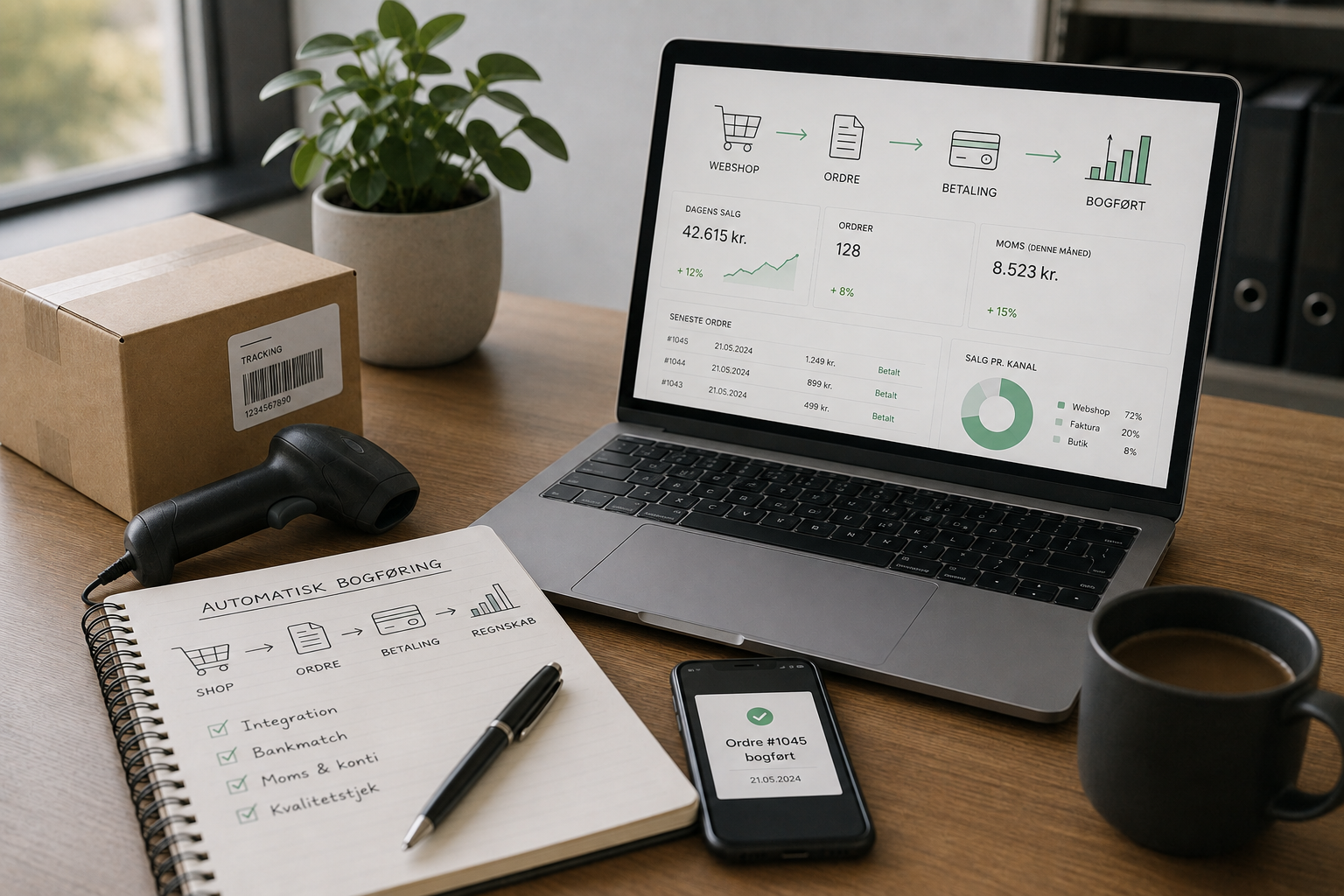
- Connect your bank to the program so that transactions are retrieved automatically.
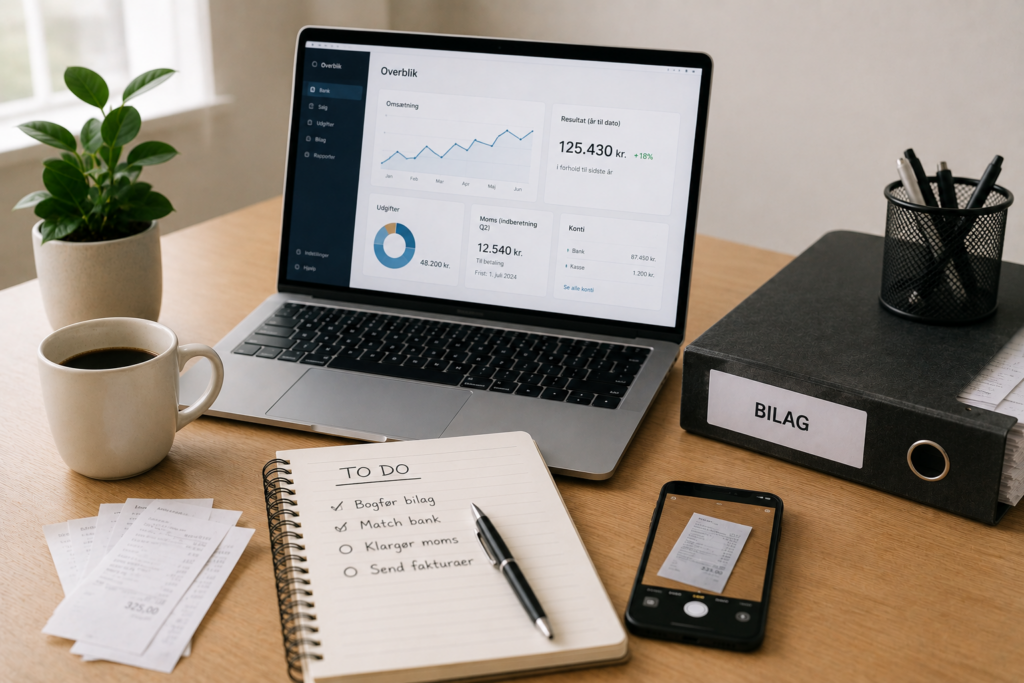
- Establish a regular schedule for processing receipts, such as every Friday or the first business day of the month.
- Be sure to register for VAT if you expect revenue of more than 50,000 kroner within 12 months.
By getting the basics in order from the start, you’ll avoid a pile of receipts on the kitchen table and a stressful weekend right before the VAT deadline.
Attachments, Deductions, and VAT
Receipts are the cornerstone of your bookkeeping. A receipt can be anything from an invoice to a receipt for a cup of coffee at a client meeting. The most important thing is that the receipt shows the date, amount, supplier, and what the item or service is. As an entrepreneur, you’re entitled to a wide range of deductions, including office supplies, phone service, internet, professional subscriptions, mileage, and insurance.
VAT must be reported on an ongoing basis, usually every three months for small businesses. We ensure that VAT returns are filed on time and that you correctly claim input tax.
Here's what you get when Accountview helps you
Our Entrepreneur Package is designed for brand-new businesses. You’ll be assigned a dedicated advisor who is knowledgeable about bookkeeping, VAT, and taxes. The package includes setting up accounting software and a chart of accounts, bank integration, ongoing bookkeeping or self-service options, VAT reporting, and a preliminary tax assessment tailored to your expected profits. You’ll never be left to figure out the numbers on your own, and you can always call in for guidance before making a major decision.
Frequently Asked Questions
When should I register my startup for VAT?
You must register for VAT as soon as you expect to have revenue of 50,000 kroner within 12 consecutive months. However, many entrepreneurs choose to register from day one because it allows them to deduct VAT on startup expenses right away. We always recommend a specific assessment based on your business model.
What should I do if I paid for expenses out of my own pocket before the business was registered?
Expenses incurred up to six months before the business’s VAT registration can often still be deducted. This requires that you keep the receipts and can document that the expenses are related to the new business. We record them as advances from the owner, and the money is transferred back to your personal account.
Should I hire an accountant right from the start, or can I handle it myself?
Most entrepreneurs can handle their own day-to-day bookkeeping in the beginning, as long as the software is set up properly. We recommend that you at least get help with VAT reporting and annual financial statements to avoid mistakes that could end up being costly. Over time, many entrepreneurs end up letting us handle the entire task.
How can I tell if I've forgotten to include a receipt in my bookkeeping?
A monthly bank reconciliation is the best way to stay on top of things, since the entry will appear in the program without a supporting document. Also, establish a simple routine where you take photos of supporting documents immediately after making a payment. We set up automatic reminders so that missing receipts are flagged while they’re still fresh in your memory.
Want to get off to a good start with the accounting for your startup? Let’s have a quick, no-obligation chat about your setup.